
rediffGURU Nayagam PP guides aspirants on how to pick the right career course and college based on their entrance scores and aptitude.
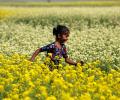
GM is already in our food chain for years. The approval for indigenous GM mustard should put fake fear-mongering to rest, says Shekhar Gupta

Many of us consume genetically modified (GMO) foods without even realising it. Which leads to an important question -- how can we protect ourselves from food adulteration and misleading claims? asks Nikita Garg, nutritionist and founder of Entech Wellness.

A new study suggests that newer oral weight loss drugs may do more than suppress appetite, potentially altering brain circuits that control motivation and reward, impacting how one experiences pleasure.

A new study suggests the mechanical load from the constant beating of the heart may suppress cancer cell growth, offering insights into why heart cancer is rare. Researchers found that cellular pathways in heart tissues alter gene regulation in cancer cells, preventing proliferation.

A new study reveals that immune cells within brain tumours may be manipulating sugar metabolism, specifically breaking down fructose, to suppress immune responses and promote tumour growth. Blocking fructose breakdown in these cells could improve immunotherapy outcomes for glioblastoma patients.

'Refined carbohydrates are the quiet troublemaker in our diet.' 'We eat plenty of calories, but not enough nutrition.'

A new study reveals that widely used heart disease risk calculators may not accurately identify Indians at risk, potentially leading to underestimation of risk and delayed treatment.


Who have been India's Laureates, winners from India or of Indian-origin?

From tackling visa woes to admission counselling, rediffGURU Dr Karan Gupta helps you choose the right course and country to study abroad.

The varieties will take at least 4 to 5 years to reach farmers after they complete the usual cycle of breeder, foundation and certified seeds.

Scientists have developed a simple blood test that can predict which heart disease patients face the greatest risk of life-threatening complications.
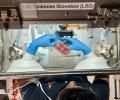
The $1.2 billion in-space manufacturing market is expected to grow and be worth more than $20 billion by 2033.

The decision marks first successful policy intervention.

'In diabetes remission, you go below a 6.5 HbA1c without medication.' 'And this happens only when you lose 10 to 15 per cent of your body weight with a good amount of lifestyle and dietary changes, exercise and sometimes medication.' 'You have to be able to sustain your HBA1C below 6.5 for at least a year without medication to say that the patient is in remission.'

Hectic parleys are underway between officials of India and the US in Washington on the proposed interim trade agreement between the two countries, an official said on Wednesday.
From genetically engineered angelfish to asteroids trips to revealing the God particle, science evolved further in 2010. Let's take a look at some of the advances in science

Dr Karan Gupta offers guidance on how to pick the right international course and university.

Astronaut Shubhanshu Shukla returns to Earth after an 18-day mission aboard the International Space Station, marking a significant milestone for India's space program and carrying out crucial scientific experiments.

Edamame + truffle oil + basmati rice = an exquisite combo.

The Supreme Court observed on Tuesday it is more concerned about the risk factors than anything else when it comes to the conditional approval granted by the Centre for environmental release of genetically modified (GM) mustard. On October 25 last year, the Genetic Engineering Appraisal Committee (GEAC) under the Union environment ministry had approved the environmental release of transgenic mustard hybrid DMH-11 and the parental lines containing barnase, barstar and bar genes so they can be used for developing new hybrids. The apex court is hearing separate pleas by activist Aruna Rodrigues and NGO 'Gene Campaign' seeking a moratorium on the release of any genetically modified organisms (GMOs) into the environment pending a comprehensive, transparent and rigorous bio-safety protocol in the public domain conducted by agencies of independent expert bodies the results of which are made public.

A few days back, Atul Ganatra, president of the Cotton Association of India, presented a grim scenario of the crop's prospects in the 2024-25 season that starts in October. Addressing the association's annual general meeting, Ganatra said the area under the crop could go down by at least 10 per cent in the coming season due to falling yields and realisation, leading to farmers losing interest. The fear of a decline in acreage comes against the backdrop of India's cotton production probably falling to its lowest in a decade, according to estimates.

The US Trade Representative noted that India's average applied tariff rate stood at 17% per cent, the highest of any major world economy.

In a setback for genetically engineered cotton, Monsanto, innovator of the strain, confirmed what sceptics had said might well happen, that the pests it was supposed to resist better than natural cotton would also innovate.

The moratorium on commercial cultivation of Bt brinjal, the genetically-modified form of the vegetable, is not likely to end anytime soon.

Companies with any seeds of Bt brinjal, the genetically modified version of the vegetable, will have to register the details with the government, to ensure none of it is sowed or otherwise gets into the market.
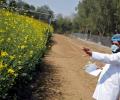
There has been strong opposition from organisations influential with the government against approval to GM foods.
Data on clinical trials of genetically-modified brinjal have been made public by the Genetic Engineering Approval Committee of the environment ministry.
It is unfortunate that a section of politicians holding policy-making positions are disregarding peer-reviewed scientific opinion on GM crops and are, instead, falling for disputable dissenting viewpoints.

During his month-long tour, Ramesh would seek views from scientists, agriculture experts, farmers' organisations, consumer groups and non-government organisations on the report submitted by the Genetic Engineering Approval Committee on Bt brinjal in October.

The prime minister's scientific advisory council had advocated introduction of GM crops in India, but under strict regulatory mechanism.

Venter's patent application for his synthetic cell creation has set off a frenzied debate on monopolies in genetic research.

It may creep in via Bangladesh and Philippines, according to A R Reddy, co-chair of Genetic Engineering Approval (now Appraisal) Committee that approved the vegetable for commercial use.
The approval to genetically modified (Bt) brinjal seems to have been been given without adequately assessing long-term health risks, although with a stipulation that surveillance and long-term follow up should be conducted two conditions that experts are aware have not been fulfilled even in the case of some critical drugs.

The current testing norms to rule out harmful effects of genetically modified crops like Bt-brinjal are far from being fool proof, a member of biotech regulator GEAC said.

Union Agriculture Minister Sharad Pawar on Thursday brushed off all allegations and reiterated his support for the introduction of Bt brinjal. He asserted that the introduction of the genetically modified brinjal can take place as it has been recommended by Genetic Engineering Approval Committee (GEAC), a scientific body, after carrying out a series of trials and tests on its impact on nature.

Amid a raging debate over release of Bt brinjal for commercial use, Science and Technology Minister Prithviraj Chavan on Tuesday said genetically-tweaked variety of the vegetable was 'safe for all'.

'Ultimately, do we want sustainable agriculture that's relevant to our climate, resources and food security? Or do we want corporate farming based on high-risk GM seeds and high chemical inputs?'
The CIC's order of April 13 had also directed DBT to disclose bio-safety data of rice, okra (lady's finger) and mustard, after an Right to Information application was filed by Greenpeace activist Divya Raghunandan.
